
The Real Way to Develop a Creative Eye
Most people film things. Very few people actually see them.

There is a difference between someone who points a camera at the world and someone who sees the world as a story waiting to be told. That difference is not a camera. It is not a color grade. It is not even talent. It is something that gets built over time through the way you live, what you let in, and how present you actually are when you show up somewhere.
I want to talk about that. Because I think most people are looking for the answer in the wrong place.
Why Camera Equipment Was Never the Problem
When I started filming I thought the gap between my work and the work I admired was equipment. Better camera. Better lens. Better everything. So I upgraded. And while the upgrade did help, the gap was still there.
Then I thought it was a technique. More tutorials. More breakdowns. More studying other people’s work frame by frame. So I did that too. And the gap was still there.
What I did not understand yet was that the eye does not live in your hands. It lives in you. And you cannot buy your way into it or shortcut your way through it. You have to grow into it.
The people whose work stops you mid-scroll are not operating a better camera. They are seeing something you are not seeing yet. And the reason they see it is because of everything they have lived, felt, absorbed, and paid attention to before they ever pressed record.
Presence Is the Starting Point
The single most important thing I have learned about developing your eye is this. You have to actually be there.
Not physically there. I mean mentally, emotionally, fully there. No part of your brain running through what you are going to post, how many people might watch it, or whether you should have brought a different lens. Just there. In the moment. Looking.
When I am present on a shoot something different happens. I start noticing things I would have walked right past if I was distracted. The way the light catches the edge of a fender. The way a person shifts their weight when they talk about something they love. The texture of a moment that you cannot manufacture but you can absolutely miss if you are not paying attention.
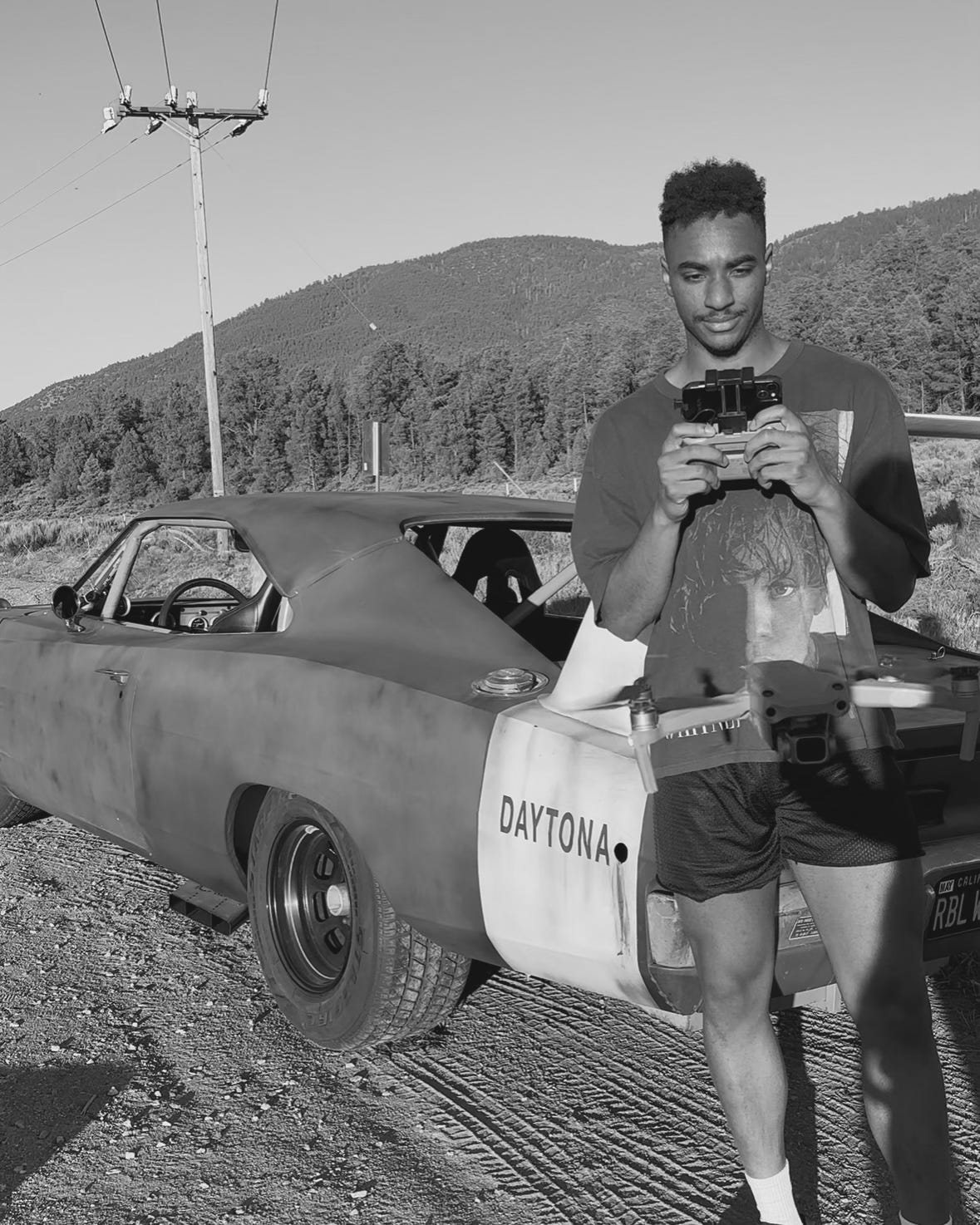
Presence is what makes you a storyteller and not just a camera operator. And presence is a practice. You get better at it the same way you get better at anything. You repeat it over and over until it becomes natural.
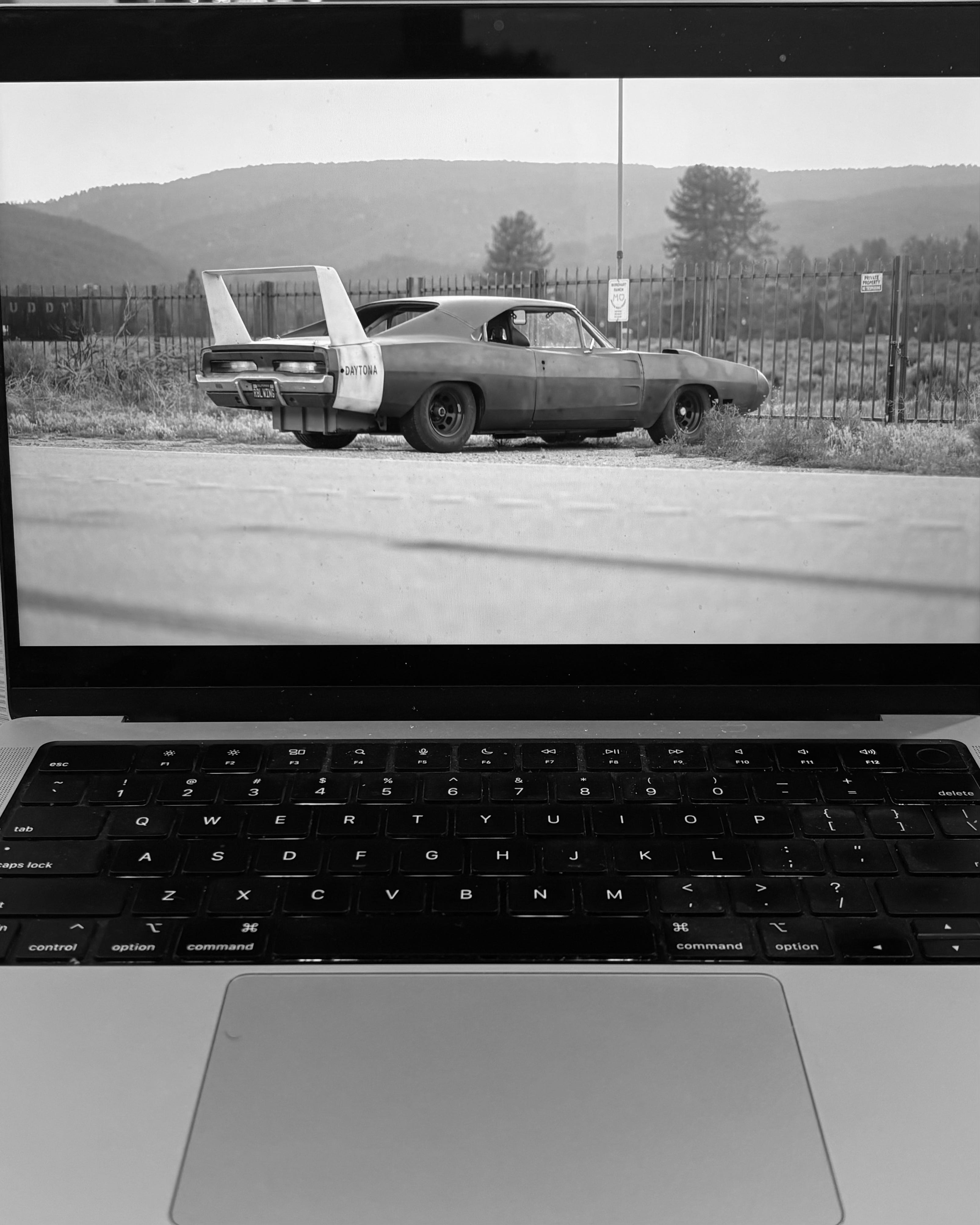
Observation Is a Full-Time Job
Your eye does not stop developing when you put the camera down. In fact some of the most important work happens when you are nowhere near a camera.
What are you noticing when you are just walking around? What catches your attention and why? What about a face, a building, a light source, an empty street? Are you even asking those questions?
The filmmakers, photographers, and painters who have the strongest eyes are usually the most obsessive observers of ordinary life. They cannot go to a gas station without noticing something worth capturing. They cannot sit in a diner without framing the room in their head. The camera is almost secondary. The vision came first.
Start training yourself to actually look at the real world in front of you. The more you do it the more you realize the whole world is full of images worth making. And then when you pick the camera up your eye is already warmed up.
The Movies You Love Are Teaching You Something
I did not always understand why certain films hit me so hard. I just knew they did. And I kept rewatching them.
What I eventually realized is that those films were building something in me. Every time I watched the way a director used silence, or held a shot longer than felt comfortable, or let a story breathe without rushing to explain itself, something was getting registered.
The movies you watch over and over are not just entertainment. They are a visual education. The way the atmosphere and colors look in The Hunger Games. The way tension gets built in a scene with almost no dialogue. The way a single close-up at the right moment can make you feel something you cannot describe. Your eye is absorbing all of those things.
So be intentional about what you watch. Study it the way you would study anything you love. That is not work. That is joy.
Music Does Something to Your Eye
This one surprises people, but I mean it completely.
Music has shaped how I see more than almost anything else. A song can show you a feeling before you know how to film it. It can reveal something in you emotionally that then finds its way into how you frame a shot or how long you hold a moment.
When I am editing, I am not just matching cuts to beats. I am looking for how the feeling of the music and the feeling of the image can work together. That instinct did not come from watching editing tutorials. It came from years of actually listening to music.
Your eye is not just a visual thing. It is an emotional instrument. And music is one of the fastest ways to tune it.
Life Experience Cannot Be Faked on Screen
Here is the hard truth. The depth of what you can show is directly connected to the depth of what you have lived.
That does not mean you have to have a dramatic backstory. It means you have to be willing to actually feel your life instead of just passing through it. The grief, the wonder, the boredom, the joy, moments that do not look like anything from the outside but feel enormous on the inside.
When you have felt something real, you recognize it in other people. And when you recognize it, you can find it with your camera. When you have not really felt something, you are just guessing. And people can tell the difference. Maybe not consciously. But they feel it. Or rather, they do not feel it, and they keep scrolling.
Your life is not separate from your work. It is the source of it.
The Unplanned Moment Is Usually the Best One
I cannot count how many times my best shots have come from nowhere. No plan. No concept. Just showing up fully and letting myself respond to what was in front of me.
That used to feel like luck. Now I understand it differently. Those unplanned moments are only available to you when you are present enough to see them. When you are locked into a rigid shot list or so in your own head that you are not actually looking around, those moments fly past, and you never know they were there.
The more present I am, the more my eye just starts working on its own. I stop thinking about what I should film, and I start seeing what wants to be filmed. That shift is hard to describe, but once you feel it, you will know exactly what I am talking about.
That is when your eye is actually developing. Not in theory. Not in practice footage. In that moment of pure, unfiltered seeing.
You Cannot Rush This. And That Is the Point.
I know we live in a world that wants everything fast. Fast results, fast growth, fast improvement. And I understand that pressure. I have felt it.
But your eye does not work that way. It grows slowly, in the background of your life. Every film you watch with real attention. Every walk where you actually look at the world. Every piece of music that breaks something open in you. Every real experience you let yourself feel instead of just documenting. All of it is building something.
The filmmakers with the most distinctive eyes did not develop them in a month. They developed them over years of living curiously, watching obsessively, and showing up fully to the moments they were in.
You are already in the process. You may not be able to see the progress yet, but it is happening. Trust it. The eye will come. It already is.
If this connected with you, share it with a creative who needs to hear it. And if you are not subscribed yet, this is what every issue feels like.
-Noah
🔥🔥 Noah!